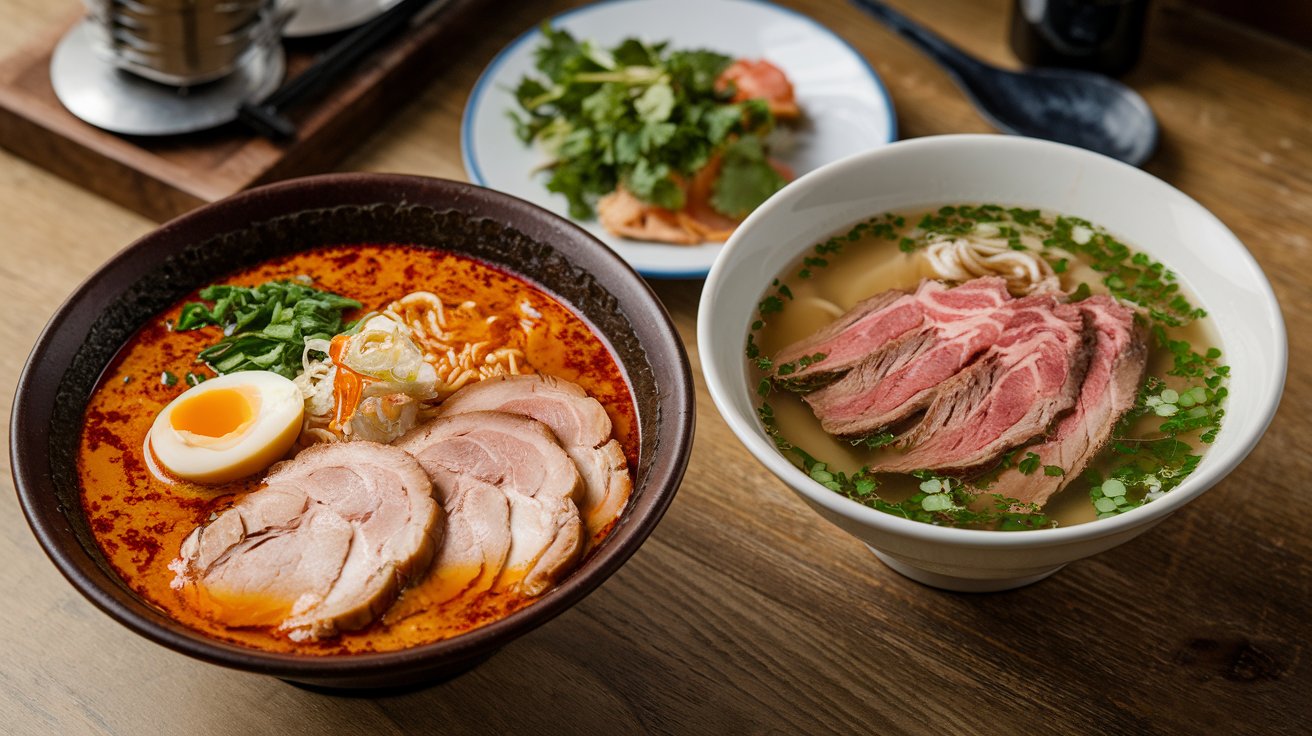
The difference between ramen and pho lies in their origins, broth preparation, and noodle types. Ramen is a Japanese noodle soup featuring wheat-based noodles in rich, complex broths, while pho is a Vietnamese dish using rice noodles in lighter, aromatic broths. Understanding these distinctions helps you choose the perfect bowl for your taste preferences and dietary needs.
What is Pho and Its Vietnamese Origins
Pho is Vietnam’s national dish that emerged in the early 20th century, combining Chinese noodle-making techniques with French beef influences from colonial times. This noodle soup traditionally consists of rice noodles served in a clear, aromatic broth infused with star anise, cinnamon, and other warming spices. The dish gained massive popularity in the United States during the 1970s following Vietnamese immigration waves.
Traditional pho preparation involves simmering beef or chicken bones for 12-24 hours to create a transparent, deeply flavorful broth. The rice noodles used in pho are flat and vary in width, providing a silky texture that absorbs the fragrant broth beautifully. Vietnamese restaurants across America now serve millions of bowls annually, making pho one of the most recognized Asian comfort foods.
Understanding Ramen and Japanese Tradition
Ramen originated in China but was adapted and perfected in Japan during the early 1900s, evolving into distinct regional styles. Japanese ramen features wheat-based noodles in rich, complex broths that can be cloudy or clear, depending on preparation methods. The dish experienced explosive growth in the United States since 2010, with ramen shops increasing by over 200% nationwide.
Modern ramen noodles are made from wheat flour, water, salt, and kansui (alkaline mineral water), giving them their characteristic springy texture and yellow color. The broth varieties include shoyu (soy sauce), miso (fermented soybean paste), shio (salt), and tonkotsu (pork bone), each offering unique flavor profiles that have captivated American palates.
Noodle Differences: Rice vs Wheat
The fundamental difference between pho and ramen noodles lies in their base ingredients and texture. Pho uses rice noodles that are naturally gluten-free, translucent when cooked, and have a softer, more delicate mouthfeel. These rice noodles absorb flavors readily while maintaining their shape, making them perfect for the light, aromatic pho broth.
Ramen noodles are crafted from wheat flour and contain gluten, resulting in a chewy, bouncy texture known as ‘koshi’ in Japanese. The alkaline content in ramen noodles gives them durability to withstand rich, heavy broths without becoming mushy. This textural difference significantly impacts the overall eating experience and appeal to different dietary preferences.
Broth Preparation Methods and Flavor Profiles
Pho broth preparation emphasizes clarity and aromatic complexity through gentle simmering techniques. The soup base typically includes charred onions, ginger, star anise, cinnamon, and cloves, creating a fragrant, translucent broth that highlights the natural beef or chicken flavors. Vietnamese cooks strain the broth multiple times to achieve the signature crystal-clear appearance that defines authentic pho.
Ramen broth preparation varies dramatically by style, from the milky-white tonkotsu created by rapid boiling pork bones to the clear, delicate chintan broths. Japanese ramen masters spend years perfecting their secret recipes, often combining multiple cooking techniques and ingredients to achieve depth and richness. The resulting broths are generally more intense and heavier than pho, designed to complement the sturdy wheat noodles.
Nutritional Comparison and Health Benefits
When comparing what is healthier between pho and ramen, pho generally contains fewer calories and less sodium. A typical bowl of pho contains 300-500 calories, while ramen can range from 400-800 calories depending on toppings and broth richness. Pho’s rice noodles are naturally gluten-free, making it suitable for those with celiac disease or gluten sensitivity.
Pho offers lean protein from beef or chicken, fresh herbs like cilantro and basil that provide antioxidants, and bone broth benefits including collagen and minerals. Ramen, while higher in calories, provides substantial protein and can include nutrient-rich toppings like eggs, seaweed, and vegetables. Both noodle soups can be part of a balanced diet when consumed mindfully and paired with appropriate portions.
Traditional Toppings and Garnishes
Pho toppings focus on fresh, raw elements that customers add according to preference. Traditional accompaniments include bean sprouts, Thai basil, cilantro, lime wedges, sliced jalapeños, and hoisin or sriracha sauces. These fresh garnishes allow diners to customize their bowl while maintaining the soup’s clean, aromatic profile characteristic of Vietnamese cuisine.
Ramen toppings are typically cooked and integrated into the bowl before serving. Common additions include soft-boiled eggs (ajitsuke tamago), sliced pork belly (chashu), bamboo shoots (menma), green onions, and nori seaweed. These prepared toppings complement the rich broth and create a more substantial, filling meal that reflects Japanese culinary precision.
Regional Variations Across America
American pho has evolved to include regional preferences while maintaining Vietnamese authenticity. West Coast cities like Los Angeles and San Francisco feature traditional Vietnamese-style pho, while East Coast variations might include larger portion sizes or fusion elements. The difference between authentic and Americanized pho often lies in broth cooking time and spice intensity.
American ramen has exploded into creative fusion cuisine, with restaurants offering everything from Korean-inspired kimchi ramen to Southern-style pork belly versions. Cities like New York, Portland, and Austin have become ramen destinations, featuring both traditional Japanese styles and innovative American interpretations that push culinary boundaries while respecting the dish’s origins.
Cost and Accessibility in the United States
Pho remains relatively affordable across American restaurants, with average bowl prices ranging from $8-15 in 2024. The noodle soup is widely available in Vietnamese neighborhoods and has expanded into suburban strip malls, making it accessible to diverse communities. Many Vietnamese restaurants offer family-style portions and combo meals that provide excellent value.
Ramen pricing varies significantly based on style and location, with trendy ramen shops charging $12-25 per bowl in major cities. Premium ingredients like aged miso, specialty noodles, and artisanal toppings drive higher prices. However, instant ramen remains extremely affordable, though it differs dramatically from restaurant-quality preparations in both nutrition and flavor complexity.
Cooking at Home: Equipment and Techniques
Making pho at home requires patience for proper broth development but uses accessible ingredients available in most Asian markets. The key to authentic pho lies in charring aromatics, maintaining gentle heat, and using quality rice noodles. Home cooks can prepare the broth over weekends and store portions for quick weeknight meals.
Home ramen preparation presents more challenges due to specialized noodle-making techniques and complex broth requirements. However, many American grocery stores now carry fresh ramen noodles, and simplified broth recipes allow home cooks to create satisfying versions. The difference between homemade and restaurant ramen often comes down to broth cooking time and noodle quality.
Cultural Significance and Dining Etiquette
In Vietnamese culture, pho represents comfort, family gatherings, and healing properties attributed to the aromatic broth and fresh herbs. Americans have embraced pho as a wholesome, restorative meal perfect for cold weather or when feeling unwell. The communal aspect of sharing garnishes and customizing individual bowls reflects Vietnamese hospitality values.
Ramen in Japanese culture symbolizes quick satisfaction and craftsmanship, with ramen masters dedicating lifetimes to perfecting their art. American ramen culture has evolved into a social dining experience, with ramen shops becoming gathering places for young professionals and food enthusiasts. The ritual of slurping noodles, once foreign to American diners, is now widely accepted and even encouraged.
Related video about difference between ramen and pho
This video complements the article information with a practical visual demonstration.
FAQ – Common Questions
What is the main difference between pho and ramen?
The main difference lies in their origins and ingredients. Pho is Vietnamese soup with rice noodles in clear, aromatic broth, while ramen is Japanese soup featuring wheat noodles in rich, complex broths. Pho emphasizes fresh herbs and light flavors, whereas ramen focuses on deep, intense broth flavors and hearty toppings.
Is pho healthier than ramen?
Generally, pho is healthier with 300-500 calories per bowl compared to ramen’s 400-800 calories. Pho contains less sodium, uses gluten-free rice noodles, and includes fresh herbs with antioxidants. However, both can be nutritious when prepared with quality ingredients and consumed as part of a balanced diet.
What makes a pho a pho?
Authentic pho requires rice noodles, clear aromatic broth made from bones and spices like star anise and cinnamon, fresh herbs, and traditional Vietnamese preparation methods. The broth must be transparent, fragrant, and carefully balanced, served with bean sprouts, herbs, and lime for customization.
Can you make pho and ramen at home?
Yes, both can be made at home, though they require different approaches. Pho needs long, gentle simmering for clear broth and readily available rice noodles. Ramen is more challenging due to specialized wheat noodles and complex broth techniques, but simplified versions work well for home cooks.
Which noodle soup is better for beginners?
Pho is generally better for beginners due to its lighter, more accessible flavors and customizable nature with fresh garnishes. The clear broth and familiar herbs make it less intimidating than ramen’s intense flavors and rich broths, though personal preference ultimately determines enjoyment.
What’s the difference between ramen and regular noodle soup?
Ramen uses specific alkaline wheat noodles with a chewy texture and complex broths requiring hours or days to prepare. Regular noodle soup typically uses standard pasta or egg noodles in simpler broths. Ramen represents a sophisticated culinary tradition with regional variations and specific preparation techniques.
| Aspect | Pho | Ramen |
|---|---|---|
| Origin | Vietnamese, early 1900s | Japanese adaptation, Chinese roots |
| Noodles | Rice noodles, gluten-free | Wheat noodles, contains gluten |
| Broth | Clear, aromatic, lighter | Rich, complex, heavier |
| Calories | 300-500 per bowl | 400-800 per bowl |
| Toppings | Fresh herbs, raw garnishes | Cooked eggs, pork, vegetables |